
卵黄栓
定义编辑本段
卵黄栓是两栖类动物胚胎发育过程中,原肠形成阶段的重要结构。在植物极区域,卵黄含量丰富但色素较少的细胞群(预期内胚层)逐渐向胚体内迁移时,部分区域被原口唇(胚孔边缘)包围并暂时暴露于胚胎表面,形成类似“栓状”的结构。随着原肠运动的推进,卵黄栓逐渐缩小,最终完全被包裹入胚内,原口唇随之闭合为背腹方向的纵缝。
ADFASDFAF23RQ23R
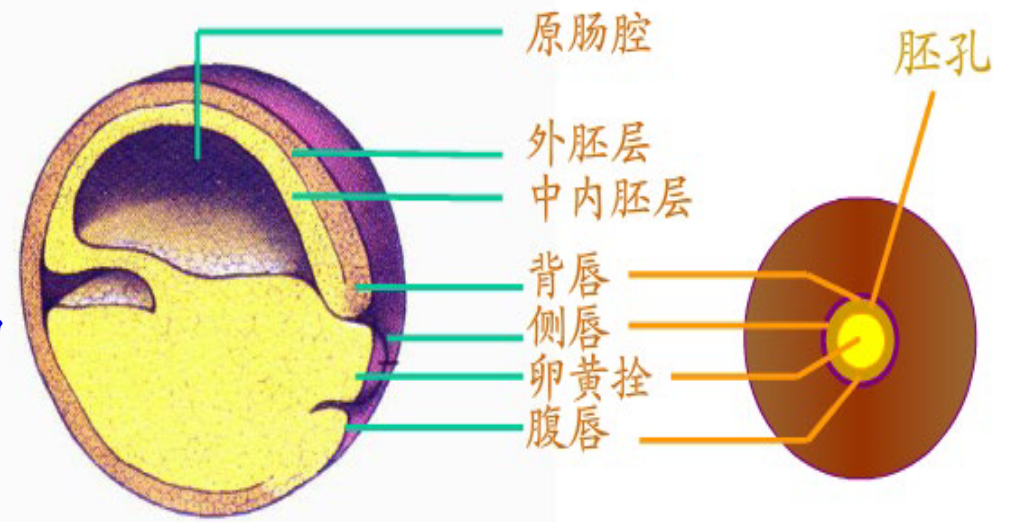
分类编辑本段
形成机制编辑本段
ADFASDFAF23RQ23R
信号通路调控 ADFASDFAF23RQ23R
力学作用 ADSFAEQWER353423413434
科学意义编辑本段
研究热点与未来方向编辑本段
参考资料编辑本段
- Gilbert, S. F. (2016). Developmental Biology (11th ed.). Sinauer Associates.
- Keller, R. (2005). Cell migration during gastrulation. Current Opinion in Cell Biology, 17(5), 533-541.
- Hardin, J., & Keller, R. (1988). The behaviour and function of bottle cells during gastrulation of Xenopus laevis. Development, 103(1), 211-230.
- Winklbauer, R., & Nagel, M. (1991). Directional mesoderm cell migration in the Xenopus gastrula. Developmental Biology, 148(2), 573-589.
- 肖明, 张红卫. (2010). 发育生物学原理. 高等教育出版社.
- 王忠勇, 刘红. (2015). 两栖类胚胎原肠运动的研究进展. 中国细胞生物学学报, 37(3), 456-462.
- Satoh, N. (2018). Developmental Genomics of Ascidians. Wiley-Blackwell.
- Heisenberg, C. P., & Solnica-Krezel, L. (2008). Back and forth between cell fate specification and movement during vertebrate gastrulation. Current Opinion in Genetics & Development, 18(4), 311-316.
附件列表
词条内容仅供参考,如果您需要解决具体问题
(尤其在法律、医学等领域),建议您咨询相关领域专业人士。